
The Eternal Anchor: Why We Still Look at the Colosseum
There is a specific weight to the air when you stand in the shadow of the Flavian Amphitheatre at night. When the sun drops and the thousands of daily visitors retreat, the Colosseum ceases to be a background for a photo and becomes what it has always been: the architectural skeleton of Rome.
At Hyperlocal Italy, we believe that the Colosseum isn't just a landmark you "see." It is an anchor. It is a massive, calcified reminder of a civilization that built for eternity, and centuries later, it still dictates how the modern city flows around it.
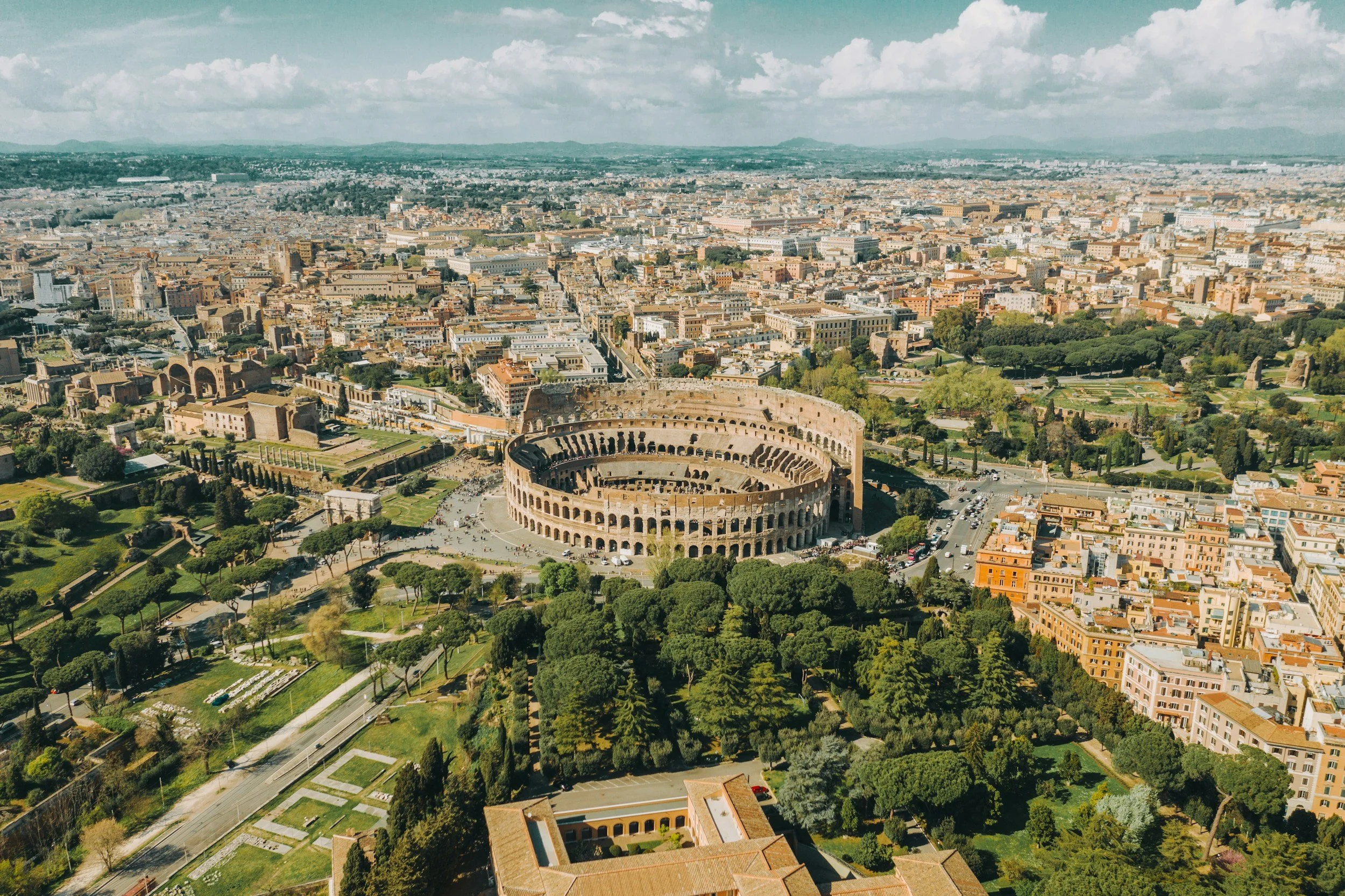
The Power of Travertine
To understand the Colosseum is to understand the stone it was carved from. This giant was built from over 100,000 cubic meters of travertine—a sedimentary rock that glows with a pale, honey-colored warmth under the Roman moon.
Even after centuries of being scavenged for its marble and iron, the structure remains defiant. It is a masterpiece of Roman engineering—a complex system of arches and vaults that allowed 50,000 people to enter and exit in minutes. Today, those same arches frame the modern chaos of Rome: the buzzing Vespas, the nearby sidewalk cafés, and the constant stream of life that refuses to stop for history.
A Landmark That Defines the Heart
Many cities hide their ghosts in museums. Rome wears its ghosts on its sleeve. The Colosseum sits at the center of a traffic circle, a silent witness to the 21st century. It doesn't feel like a relic because it isn't treated like one—it is the pulse point of the city.
The "Hyperlocal" way to experience it is to find the stillness. It’s in the blue hour, just as the city lights begin to flicker on, and the travertine begins to hum with reflected light. In that moment, you realize that the Colosseum doesn't just define Roman history; it defines the Roman spirit—rugged, enduring, and unapologetically grand.
Beyond the Arena
While the history of the gladiators is well-documented, the true beauty of the Colosseum is its endurance. It has survived earthquakes, fires, and the fall of an empire.
Rome has changed a million times. The Colosseum simply waits for the next century.
