
Panic and Dust: The Raw Reality of the Mara Crossing
Forget the slow-motion nature documentaries with the soothing voiceovers.
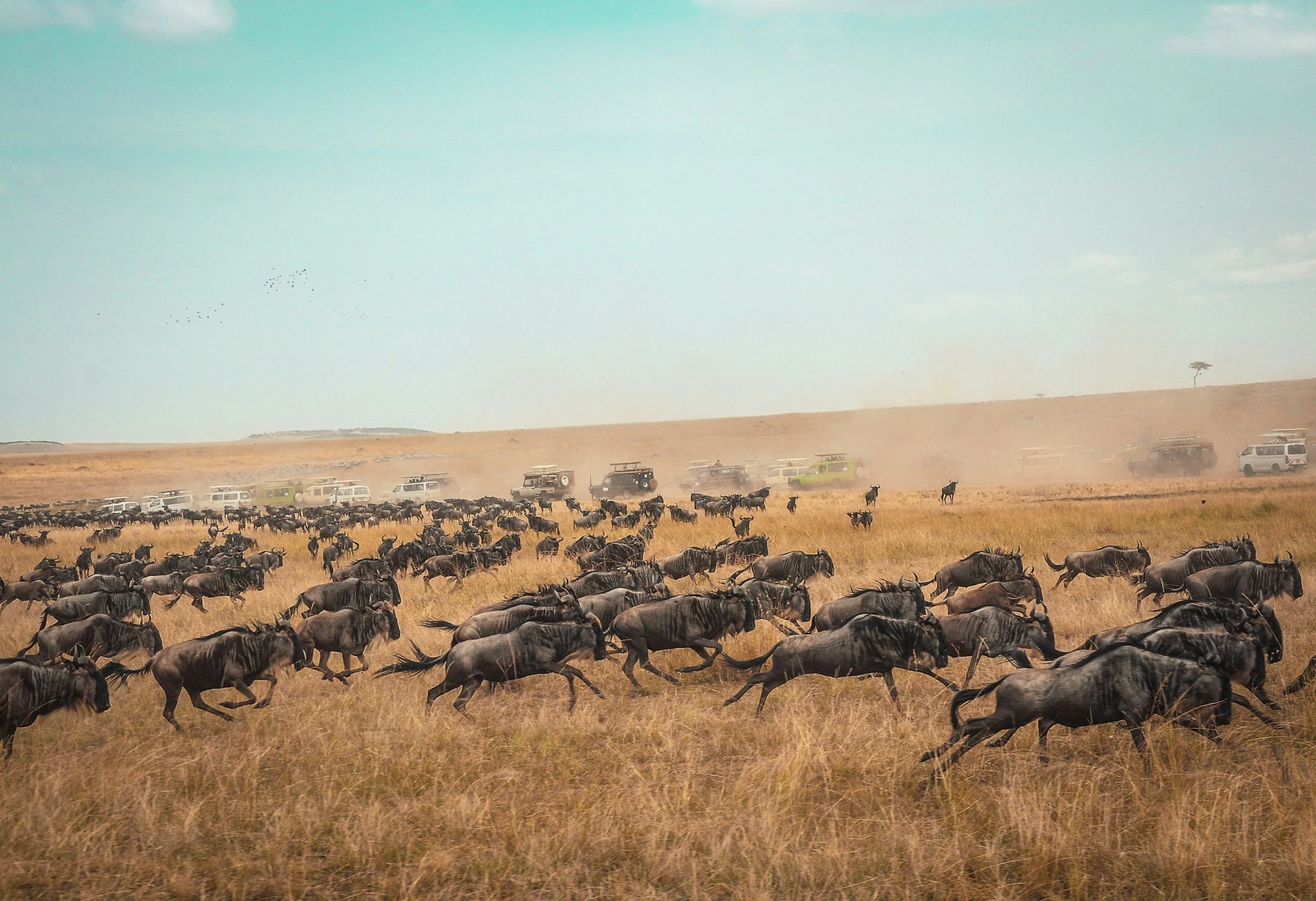
When you’re standing on the edge of the Mara River, the Great Migration doesn't feel "peaceful." It feels like a riot. It’s the sound of a million wildebeest grunting in a panicked chorus, the smell of churned-up earth, and a cloud of dust so thick you can taste the savanna in the back of your throat.
The Wait
The biggest lie about the migration is that it’s constant action. It isn't. You can sit in a jeep for six hours in the blistering Kenya sun, staring at a herd of ten thousand animals standing on a ridge, waiting for one "leader" to be brave (or stupid) enough to jump. Then, in a split second, the tension snaps.
The Water
When they finally go, they go all at once. It’s a vertical wall of dark fur and horns crashing into the water. The Mara River isn't just a crossing; it’s a gauntlet. You see the crocodiles—huge, prehistoric shadows—moving toward the splash. You see the sheer physics of the river current trying to sweep calves downstream. It is the World Cup of nature, played for keeps.
The Aftermath
Once they’re across, there’s no celebration. The herd keeps moving because they have to. The Mara is a place of perpetual motion. For the Maasai who have lived alongside this cycle for centuries, it’s not a "tourist event"—it’s the heartbeat of the land. It’s the literal movement of life from one side of the horizon to the other.
The Hyperlocal Advice:
Patience is the only currency. Don’t pressure your guide to move. The best crossings happen when you’ve been sitting still for half a day.
Listen, don't just look. Put the camera down for a minute. The sound of those hooves hitting the riverbed is something a microphone can't capture.
Respect the Mara. You’re a spectator to a survival race. Stay in the vehicle, keep the noise down, and let the animals run their course.
