
Liquid Gold: The Alchemy of an Oia Sunset
There is a specific phenomenon that happens in the Greek Cyclades that painters have tried to capture for centuries. It’s not just "golden hour"—it is a total transformation of matter. At 36.4618° N, in the village of Oia, the sunset doesn't just happen in the sky; it happens on the walls.
At Hyperlocal Greece, we’ve seen the "Oia sunset" plastered across every travel brochure in existence. But to experience it hyperlocally is to understand the interplay between the volcanic rock, the blinding white lime-wash of the homes, and a sea so deep it looks like ink until the sun touches it.
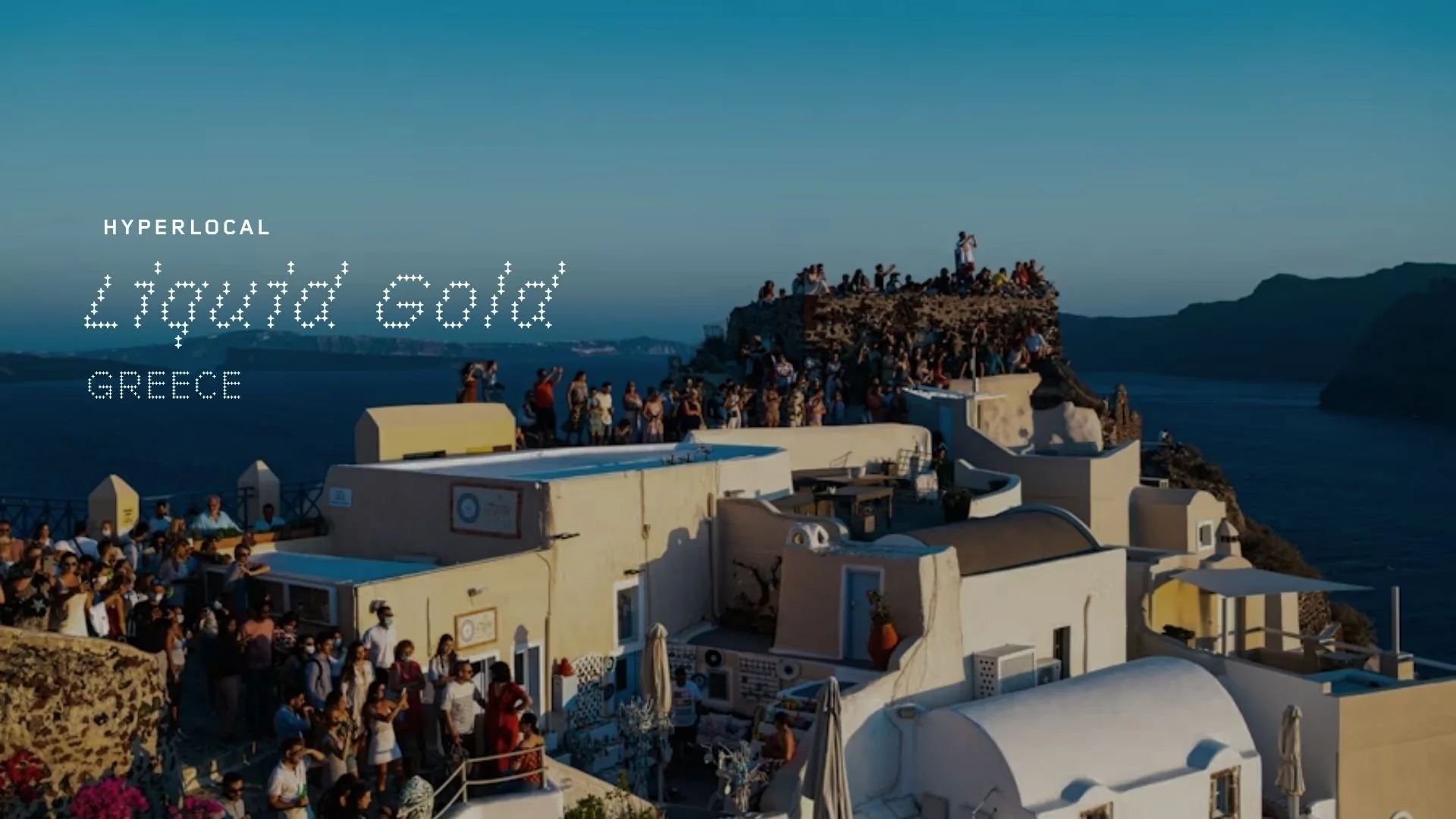
When the Aegean Turns to Light
As the sun begins its descent toward the horizon of the Aegean, the physics of the village changes. The whitewashed homes, designed for centuries to reflect the brutal Mediterranean sun, begin to soak up the oranges and pinks of the sky. The walls don't just reflect the light; they seem to glow from within.
Looking out from the caldera’s edge, the sea undergoes its own metamorphosis. It ceases to be water and becomes a sheet of liquid gold. It’s a moment of total visual saturation—where the blue domes of the churches become anchors of coolness in a world that has turned entirely warm.
The Hyperlocal Reality: Timing the Glow
Everyone knows Oia is crowded. But the hyperlocal secret is in the transition. Most people arrive for the final "drop" of the sun. The true magic, however, is in the thirty minutes before and the twenty minutes after.
The Pre-Glow: When the light hits the windmills at a sharp angle, casting long, dramatic shadows across the marble-paved paths.
The Blue Hour: After the sun disappears and the crowds begin to clap and disperse, a deep, electric blue settles over the caldera. This is when the village lights begin to flicker on like fallen stars.
Why We Still Watch
It is easy to be cynical about "tourist" spots, but Oia’s sunset remains a bucket-list experience for a reason. It is one of the few places on earth where the architecture and the geography conspire to create a masterpiece of light every single evening.
It is a reminder that some things are worth the crowd. It is a reminder that light can be heavy, that white can be colorful, and that a single horizon can hold the history of an entire sea.
The Aegean is calling. Are you ready to see the light?
