
Doha's Most Colorful Streets
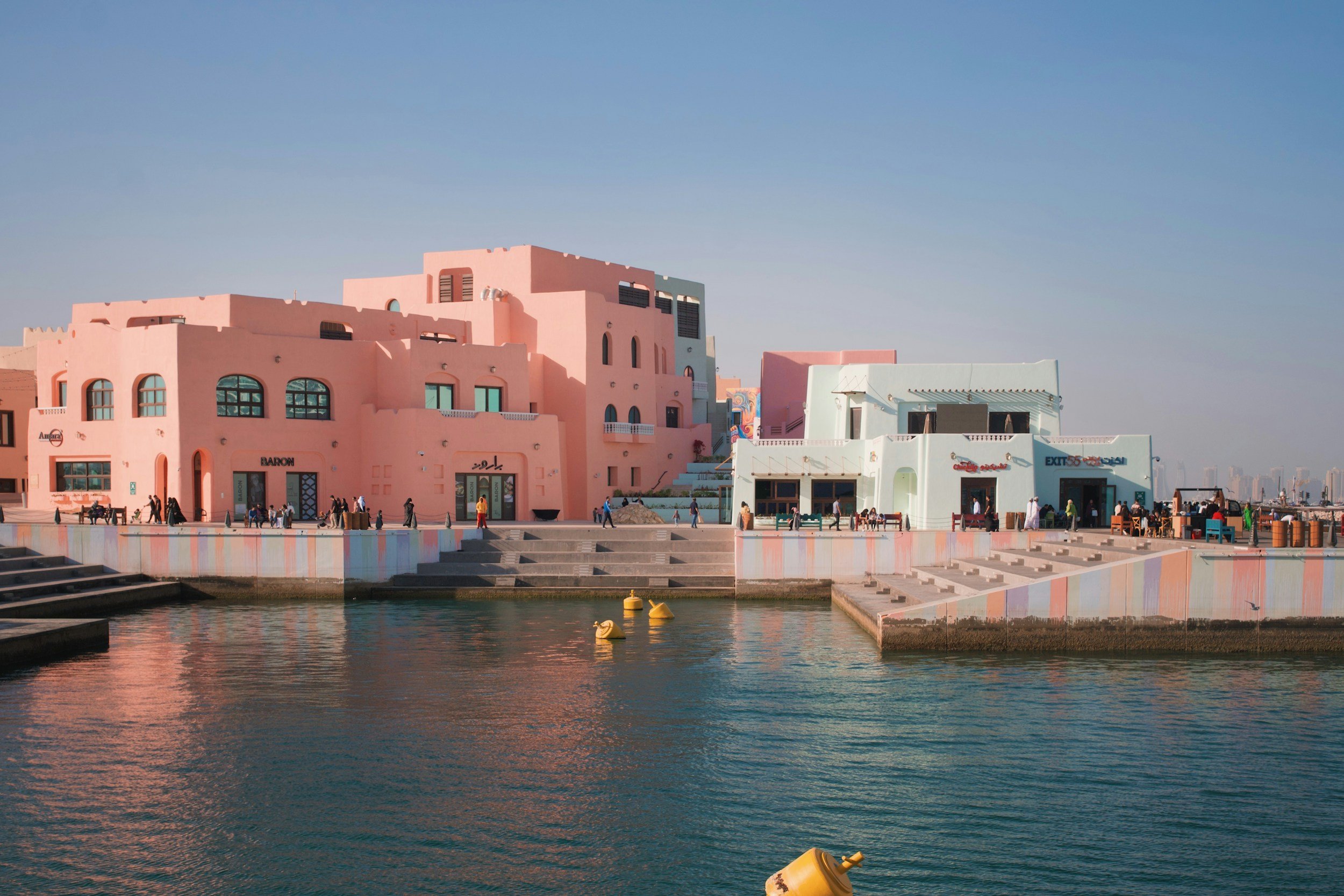
Cities often reinvent themselves.
Old industrial districts become creative hubs. Historic waterfronts evolve into destinations where locals and visitors gather. Former working ports find new life through culture, design, and public spaces.
In Doha, Mina District represents one of the most striking examples of that transformation.
Located near the city's historic port, Mina District has emerged as one of Qatar's most visually distinctive neighborhoods. Rows of pastel-colored buildings line pedestrian-friendly streets, creating a setting that feels noticeably different from the glass towers and modern skylines that dominate much of contemporary Doha.
Yet Mina District's appeal extends beyond its colorful facades.
The neighborhood sits at the intersection of Doha's past and future. For decades, this area played an important role in the city's maritime activity. The sea shaped trade, livelihoods, and the development of the surrounding community. Today, while the district has evolved, its connection to the waterfront remains central to its identity.
Walking through Mina District reveals a slower pace than many visitors expect from a rapidly developing Gulf capital. Streets encourage exploration rather than efficiency. Small cafés spill onto walkways. Public spaces invite lingering. Murals, design elements, and carefully restored architecture create an environment where details matter.
The result is a neighborhood built for discovery.
Part of what makes Mina District successful is its ability to balance preservation and renewal. Rather than erasing the area's history, redevelopment has embraced it. Traditional architectural influences remain visible while contemporary design introduces new energy and purpose.
This approach reflects a broader shift taking place across many cities in the Gulf region. Urban development is increasingly focused not only on building new landmarks but also on creating neighborhoods with character, walkability, and a sense of place.
Mina District embodies that philosophy.
Its popularity has grown among photographers, artists, families, and visitors seeking a different perspective on Doha. The district demonstrates that vibrant urban experiences do not always require monumental architecture. Sometimes they emerge from thoughtful streetscapes, inviting public spaces, and a strong connection to local identity.
The waterfront plays a particularly important role in shaping the atmosphere. Views across the harbor provide a constant reminder of Doha's relationship with the sea. Long before Qatar became known for its modern skyline, maritime trade and pearling connected communities across the Gulf. Mina District preserves part of that story while presenting it in a contemporary context.
For Hyperlocal World, the neighborhood offers an important lesson in place-making.
Successful districts are not defined solely by what they contain. They are defined by how they make people feel. Mina District creates a sense of curiosity, calm, and connection that encourages visitors to engage with the city differently.
It is colorful, certainly.
But its real achievement lies in transforming a historic port into a neighborhood where culture, architecture, and public life come together naturally.
In a city known for rapid growth and ambitious development, Mina District proves that some of the most memorable urban spaces are built not around scale, but around experience.
