
Mtskheta: The Weight of Stone
There is a specific kind of gravity in Mtskheta that you won’t find in the wine bars of Tbilisi. It’s the weight of 3,000 years of continuous history, layered into the yellow tuff stone of its cathedrals and the cold silt of the two rivers that collide at its base. If Tbilisi is the heartbeat of modern Georgia, Mtskheta is its soul—ancient, unyielding, and profoundly silent.
The Confluence
To understand Mtskheta, you have to look down from Jvari Monastery. Perched on a rocky mountain top, this 6th-century masterpiece offers the most iconic view in the Caucasus: the emerald-green Aragvi river meeting the mud-brown Mtkvari. They don’t blend immediately; they flow side-by-side in a visible struggle of color. It’s a geographical metaphor for Georgia itself—a place where the wild mountains meet the path of empires.
The Living Stone
Down in the valley, Svetitskhoveli Cathedral dominates the skyline. It’s not just a church; it’s an architectural ghost story. Legend says the robe of Christ is buried beneath its foundations. Whether you believe the theology or not, you feel the energy the moment you step inside. The air smells of beeswax and centuries-old dampness. The frescoes are fading, the stone floors are uneven from millions of footsteps, and the silence is so heavy it feels physical.
The Hyperlocal Reality
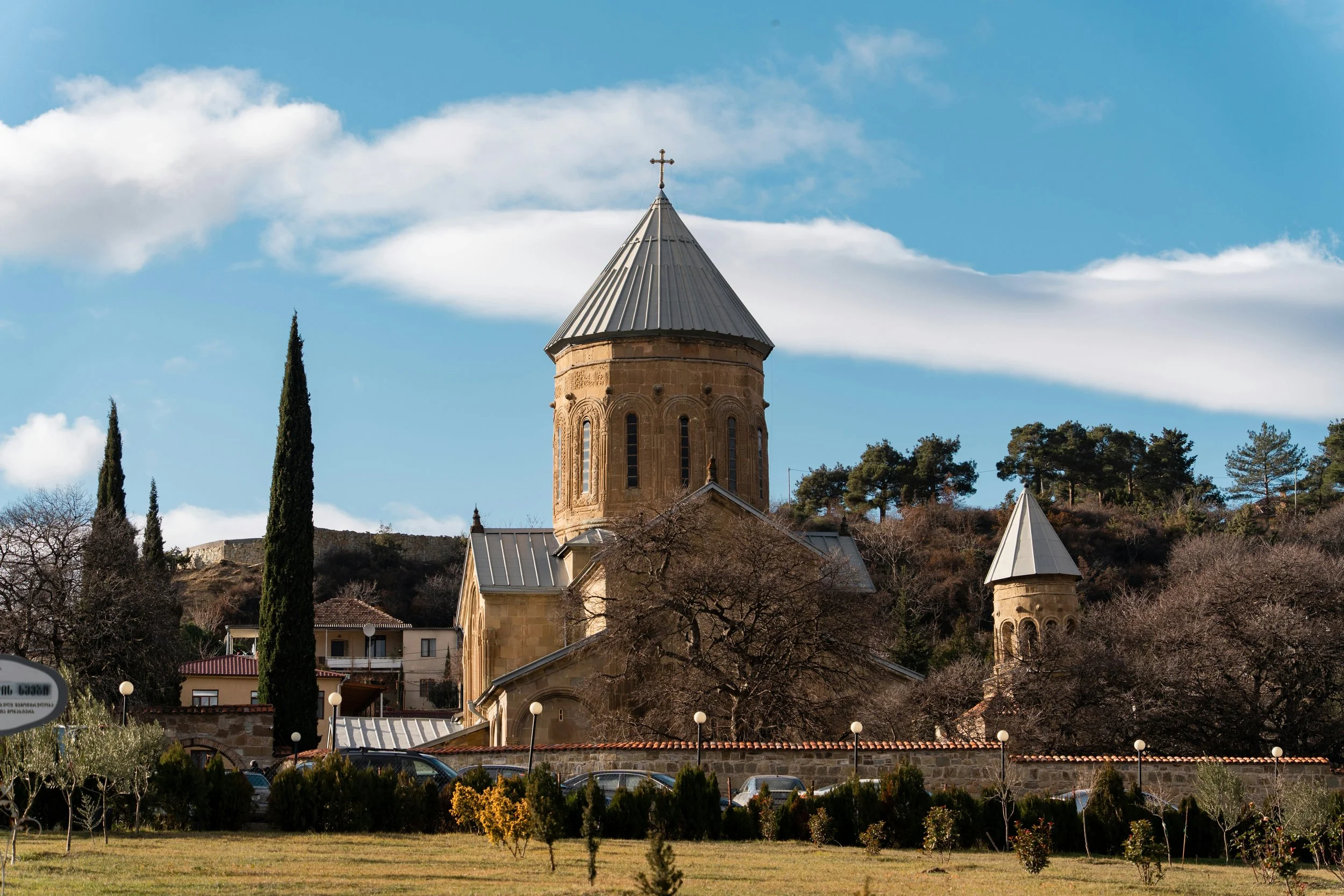
Mtskheta is often labeled a "living museum," but that’s too passive. Museums are where things go to die; Mtskheta is where history refuses to leave. It is the birthplace of Georgian Christianity, a UNESCO site that has survived invasions from every direction. The "Hyperlocal" way to experience it isn’t to rush through the gift shops—it’s to stand in the quiet stone halls of Samtavro and realize that people have been seeking peace in this exact spot since the Bronze Age. In a world that changes every fifteen minutes, Mtskheta is a reminder of what it looks like to stay put.
