
Budva: The Stone Maze
If you look at the skyline of modern Budva, you see glass, cranes, and the high-velocity energy of a "Balkan Miami." It’s loud, it’s expensive, and it’s trying very hard to be the future. But then you look down at the tip of the peninsula, and you see the Stari Grad—the Old Town. It is a 2,500-year-old limestone anchor that refuses to let the city lose its soul.
The Venetian Blueprint
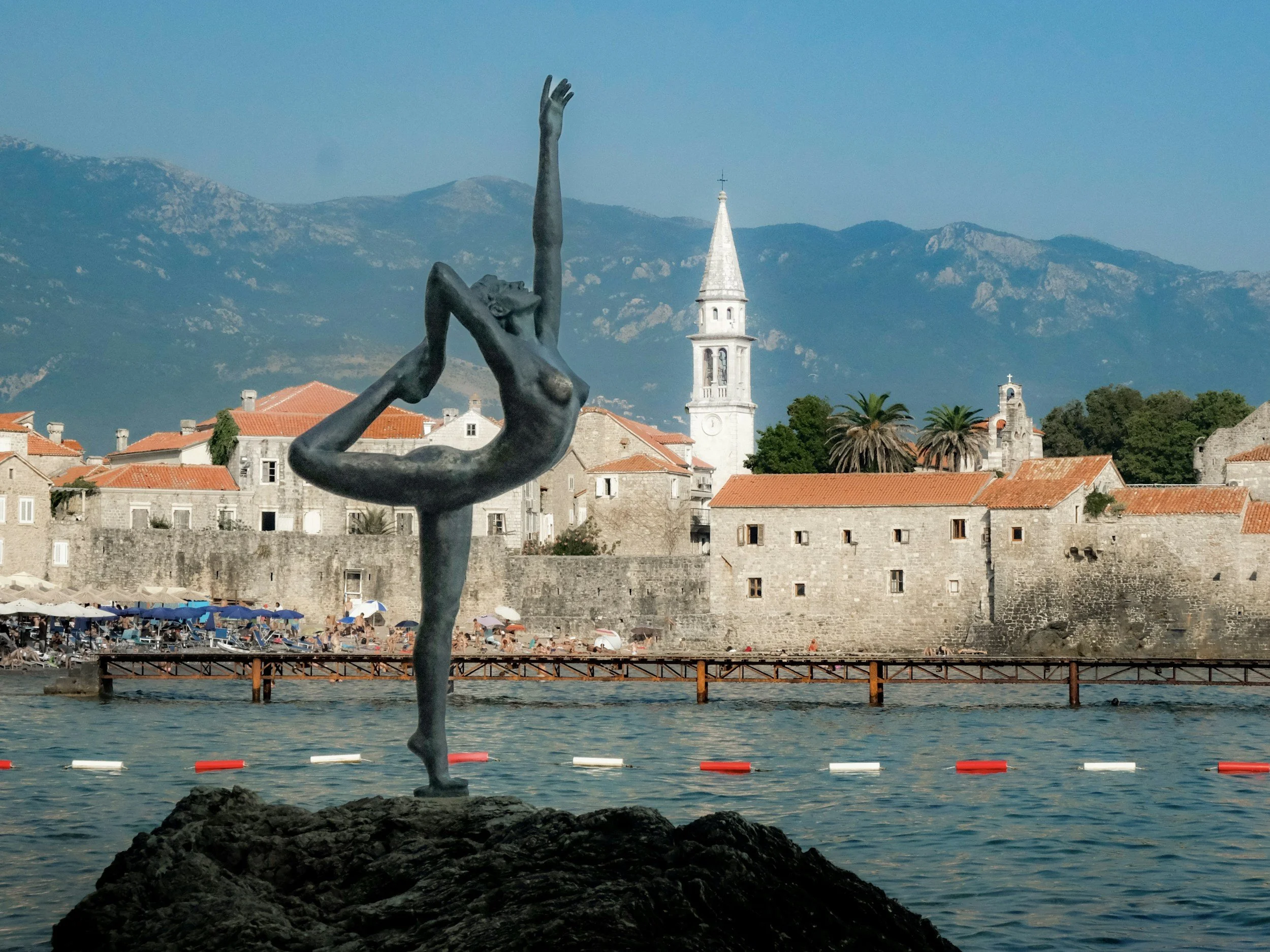
Walking into Budva’s Old Town is like falling through a crack in time. The streets aren't wide enough for cars, and the walls are thick enough to have survived five different empires. Most of what you see today is the work of the Venetians, who spent nearly 400 years turning this rock into a fortress. You can still see the Lion of Saint Mark carved into the stone, watching over the narrow alleys where the air always smells like salt and drying laundry. It’s a maze designed to confuse invaders, and even today, it does a pretty good job of losing tourists.
The Red Roof Rebellion
From the Citadel, the view is a sea of orange-red tiled roofs clashing against the impossible turquoise of the Adriatic. It is a visual rhythm that hasn't changed since the Middle Ages. The "Hyperlocal" reality of Budva is the contrast. You have the roar of the beach clubs just 100 meters away, but inside these walls, the stone absorbs the noise. You’re in a courtyard sipping a bitter coffee, surrounded by hidden doorways and 7th-century church foundations, and you realize that the skyscrapers behind you are just temporary. The stone is permanent.
The Soul in the Alleys
Budva isn't just a postcard; it’s an endurance test of history. It was leveled by an earthquake in 1979 and painstakingly rebuilt stone by stone. That’s why it feels different. It wasn't just built; it was resurrected. To really feel the city, you have to get lost in the "inner maze"—away from the main gates. Find the small, nameless squares where the locals live, where the ivy climbs over Venetian windows, and where the history is so thick you can feel it in your bones. Budva’s Old Town doesn't just exist; it persists.
