
Ha Long Bay: The Stone Fleet
Ha Long Bay is a victim of its own beauty. It is the most photographed, most visited, and most talked-about patch of water in Southeast Asia. Usually, when a place gets this much attention, the reality is a letdown—a sanitized version of the dream. But Ha Long Bay is different. Even through the mist and the flotillas of cruise boats, the sheer, vertical arrogance of the place is undeniable. It is a stone fleet of 1,600 limestone karsts that looks less like a landscape and more like a geological war zone.
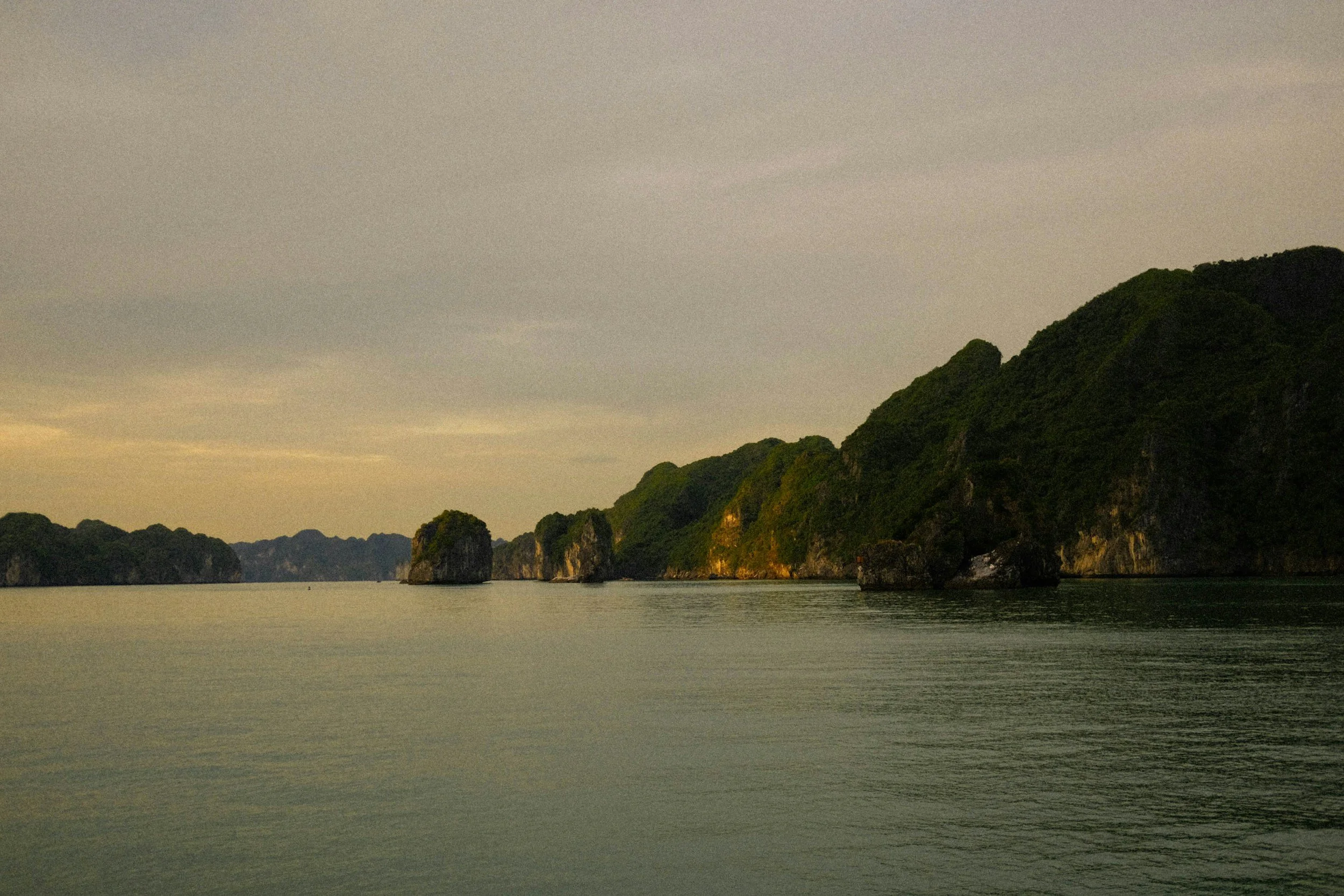
The Descending Dragon
The name literally means "Descending Dragon." Local legend says the gods sent a family of dragons to protect Vietnam from invaders, and they spat out jewels and jade that turned into these islands to block enemy ships. Looking at the jagged, hollowed-out peaks rising 200 meters straight from the emerald sea, the myth feels more plausible than the science. Geologists talk about 500 million years of tropical karst evolution; the locals talk about dragons. Standing on a deck at dawn, watching the fog roll between the pillars, the dragon story wins every time.
The Weight of the Emerald
The water here isn't blue; it’s a thick, heavy emerald green, colored by the minerals of the limestone and the life beneath the surface. It’s a silent, liquid mirror that doubles the scale of the islands. The "Hyperlocal" reality of Ha Long Bay is found in the pockets that the day-trippers miss. It’s in the hidden lagoons reached only by kayak through low-hanging caves, and the floating fishing villages where generations have lived their entire lives without ever stepping onto "solid" ground. It’s a world built on water, where the stone is the only thing that stays still.
Living Up to the Hype
There is a cynicism that comes with visiting a UNESCO site this popular, but Ha Long Bay breaks it. It humbles you. It doesn't matter how many boats are in the harbor; when you get out into the heart of the bay and the sheer walls of a 20-million-year-old mountain start closing in around you, the noise of the modern world evaporates. You’re left with the sound of water lapping against stone and the realization that you’re witnessing one of the few places on earth where nature didn't just build—it flexed.
